 James Henderson
“As a business, the unlock happened for us around eight months ago,” explained Domenico Garfi, Chief Revenue Officer at Tecala Group.
Garfi has spent more than 20 years working within the limits of off-the-shelf applications and picturing the tools he wished the business would build.
This is a common case study within organisations across Australia. Same persistent problem, different business unit.
The unlock?
An internal presentation to the executive leadership team by Shaun Leisegang – Chief Automation, Data and AI Officer at Tecala – on the capabilities of Claude Code.
“Shaun is an incredible visionary within the AI space,” Garfi continued.
The demonstration went well beyond everyday use of Microsoft Copilot.
“This was no longer an operational efficiency tool or a productivity gain tool. This is about creating developers out of every person in the entire business.”
For a CRO who takes Tecala’s AI offering to businesses across the country, the demonstration opened up new territory.
“For me, it was 20 years of sales, marketing, governance and management knowledge all coming together as one solution,” Garfi recalled.
“All of these tools that I wish I had to be able to manage my team – and then suddenly I have the smartest software developer in the world to help me go and build and solve that business problem.”
The possibility only became more tangible through deeper training and one-on-one support.
“Shaun and I went deeper and that is the value of training that is tailored to people within the business,” Garfi added.
“That was when everything was unleashed in terms of creativity but equally confined and configured correctly to ensure we didn’t have any technical or data issues. That was a big unlock for me as a CRO, it was a big unlock for our CFO and it was a big unlock for our Chief People and Culture Officer.”
This isn’t some well-crafted anecdote repeated and refined a hundred times. This isn’t second-hand information from a third-hand source.
This is simply a lived experience – raw, real and entirely relatable to every organisation staring down the AI barrel across Australia.
“At Tecala, we’re on our own AI journey,” Garfi said. “Everything that we’re doing with AI at the moment is about our own operational efficiencies that each business in Australia is going through right now.”
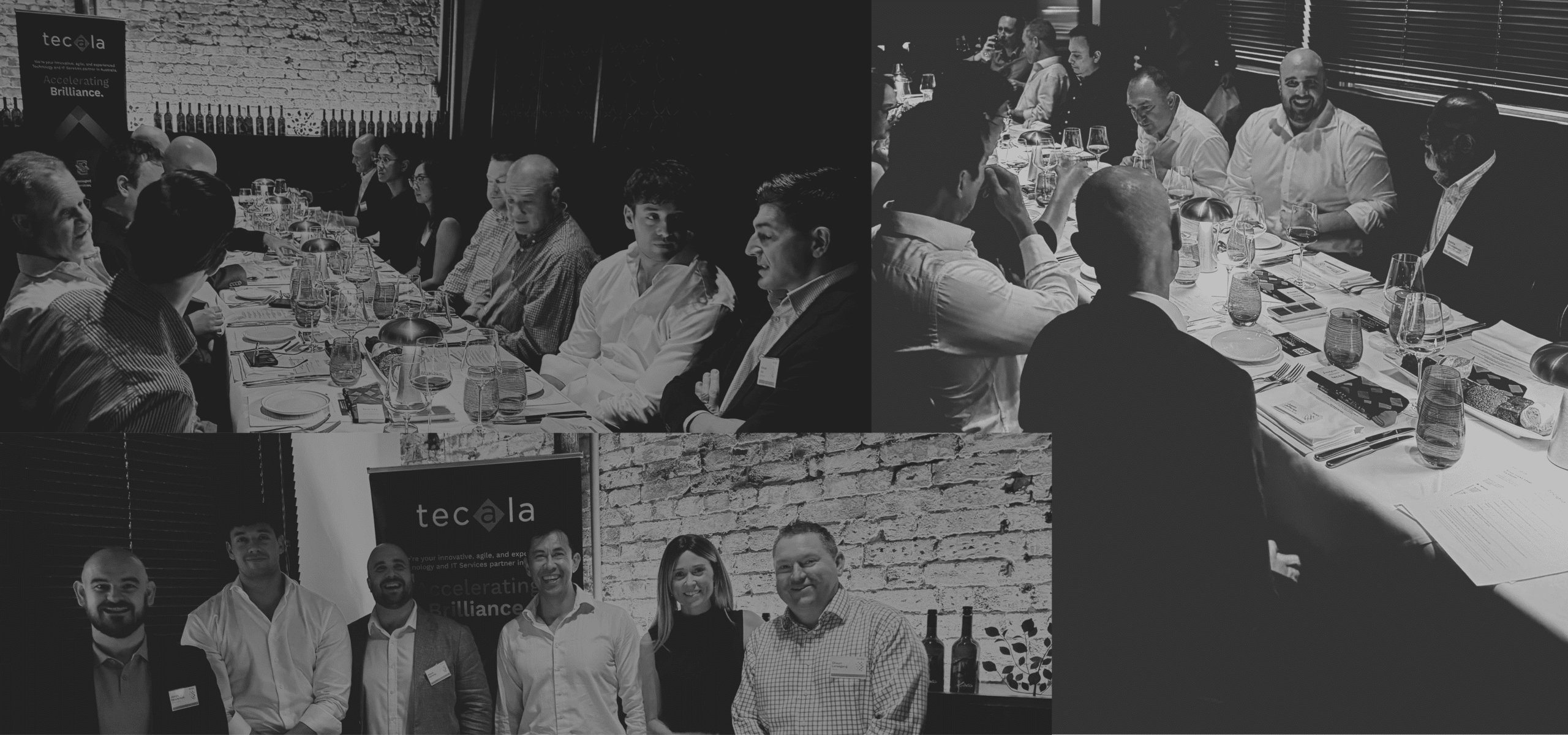
Hence Innovation, Growth and the Future Business Model – an Executive Roundtable created to examine how AI, cloud, automation and data are reshaping products, services, workforce models and long-term growth strategies, ultimately defining what the next generation of Frontier Firms will look like.
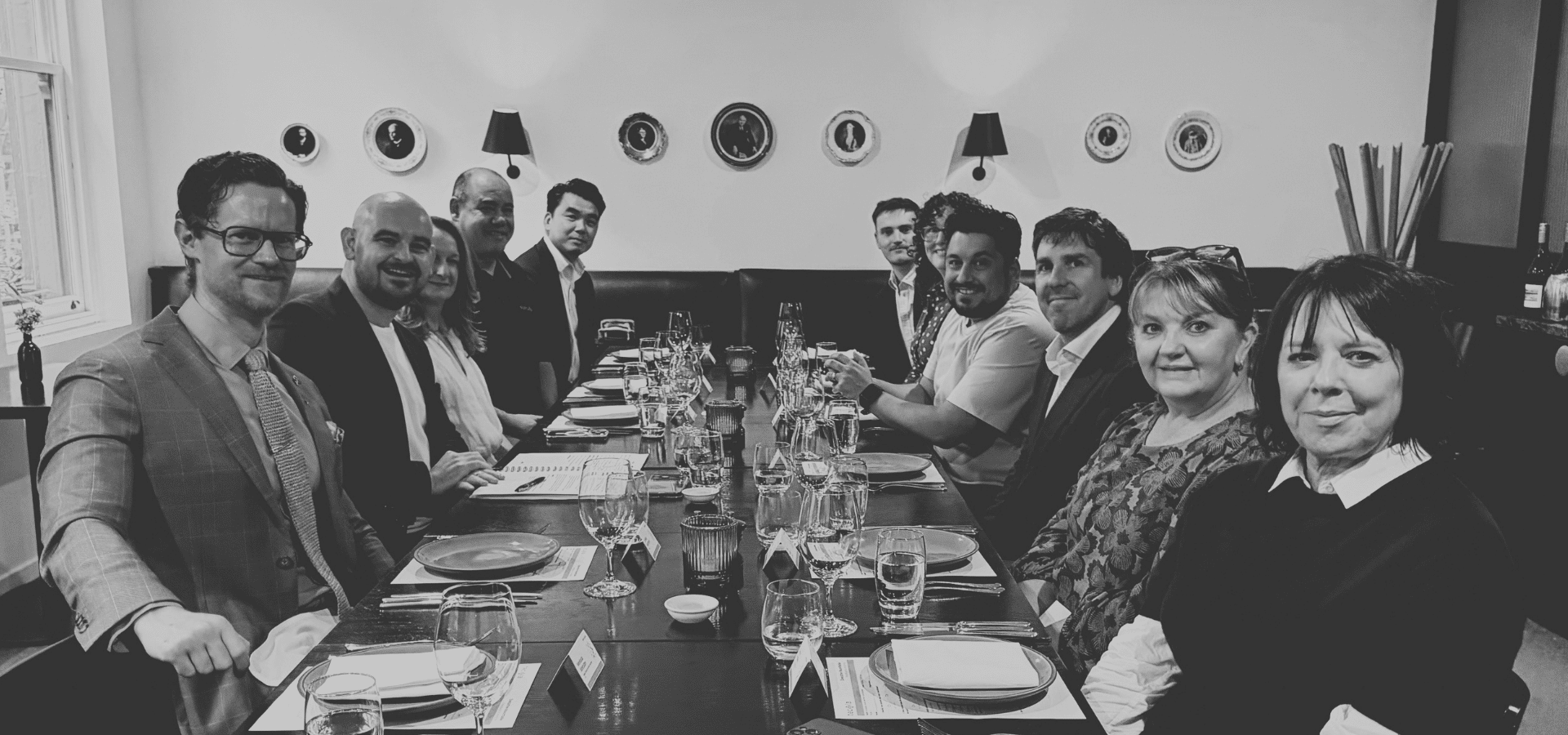
This exclusive session in Melbourne housed CIOs, CTOs and Directors, forming part of an Executive Insights Program – The Frontier Firm: An Australian Approach – designed to explore what it takes to build and lead a Frontier Firm in Australia.
Through independent research, executive roundtables and industry analysis, this editorial series will outline how organisations are navigating this transition, the challenges they face and the opportunities ahead.
“How can businesses reach that unlock stage with AI? That’s the key question being asked in boardrooms across the country.”
Domenico Garfi · Chief Revenue Officer, Tecala Group
Start with the problems people already understand
One challenge raised during the discussion was how to make AI relevant to employees who had been given access but little direction. The range of possibilities could make the starting point harder to identify.
Again, Garfi shared the problems he encountered within his own business unit as a reference.
“I knew what the business problems were because I was dealing with them every day,” he acknowledged. “Then it became a case of going out and building the tools to solve those problems.”
Tecala facilitated a small and trusted group of executives to experiment within controls. Focused training then helped Garfi connect the capabilities he had seen demonstrated to his own requirements.
The experience subsequently extended to other executives and confidence grew through solving specific problems.
“Tackle that one little problem head-on and go solve that,” Garfi said.
“Then comes the realisation and disbelief that you could actually solve the problem so the motivation is there to go and solve the next one, and the next one, and the next one. Before you know it, you’ve built this critical business application that is very bespoke and niche to you but delivers so much insight.”
The starting point was often a frustration with something the business already used. For example, a workplace application that lacked a key ingredient or accounts payable software that consistently fell short in critical areas.
“At some point during this process, businesses will go through a massive unlock,” Garfi advised.
“But that unlock will only happen once you start experimenting with more than just Microsoft Copilot – whether that is something confined to a smaller subset or something with a few internal champions. Whatever the approach, businesses must allow these champions a little more freedom to experiment and access the unlock that they need.”
At Tecala, much of the progress involved reporting, analytics and access to information. In short, making insights easier to understand and use.
“We’ve gone much deeper on the reporting, analytics and insight side, and how we make decisions from that point – Claude has allowed us to connect our systems a lot more easily,” Garfi explained.
“As humans, we have gotten used to using Excel as our data aggregation point. We’re pulling in data, downloading a CSV file or as a Power BI report into Excel, and then we’re using pivot tables to create data insights from that. I have not touched an Excel spreadsheet in eight months.”
Furthermore, Tecala’s finance team developed an application that brought billing, opportunities and aged debt into a dashboard for the executive leadership team. Information previously assembled through separate reports can now be examined together through a single pane of glass.
“Now you can make more educated and faster business decisions,” Garfi said.
“Our advice is to think of your applications as data sets. Create an overlay on top of that to be able to talk to your data, then you will be able to correlate data sets to draw insights. That will be that initial unlock, especially for an executive leadership team.”
Finding value in existing expenditure
Budget and capacity were recurring constraints around the table. Leaders were balancing experimentation with existing commitments, often with lean teams and limited room for additional spending.
Garfi described one way Tecala had created space: reassessing the value of software it already purchased.
“Have you ever felt like an application in your business is not delivering the value that it needed to deliver?” Garfi challenged. “There’s now an opportunity to either unleash smart people within your organisation or work with a partner to help build that bridge and close that gap.”
An internal example at Tecala involved a productivity application. The business rebuilt it internally within 72 hours, then made it suitable for organisational use.
“We’ve now removed that $4,000 monthly cost from our business and put in an application that anyone in our organisation can use, and does use.”
Domenico Garfi · Chief Revenue Officer, Tecala Group
“The point I want to make around budget is that you may need to borrow from, or break something, over here to offset the cost of developing something over there that’s going to deliver significantly more value.”
The saving gave Tecala a visible financial result, alongside functionality developed around its requirements. Organisations must therefore assess the development effort, ongoing support and expertise required for in-house applications to find value in existing expenditure.
As the applications became more useful, Tecala faced another task: making them dependable beyond the individuals who had built them.
For Garfi, this centred on entering an “industrialisation loop” – moving departmental tools into environments where they could be shared, controlled and supported. The finance dashboard illustrated why that mattered.
“That cannot live on our CFO’s hard drive.”
Domenico Garfi · Chief Revenue Officer, Tecala Group
“It has to be an application that is hosted in an environment. Then you go through this industrialisation loop that has a governance overlay, making sure you have the right access credentials and single sign-on.”
Several executives at the table had experienced the consequences of deploying technology without sufficient training or controls. But the organisations pulling ahead are rethinking operating models, embracing continuous innovation and building stronger alignment between technology investment and business outcomes.
For example, Tecala’s initial experimentation involved a small group under tight controls. Wider use required further work. As those applications became part of everyday operations, they needed clear ownership of their maintenance, support and continued suitability.
Reliance on agents could make that responsibility more consequential.
“As organisations become more agent-reliant and the human element reduces, if something happens with the agent, you can no longer spin up the human element to take on the load,” Garfi outlined.
A business seeking to expand capacity without equivalent headcount growth may find that additional capability difficult to replace during disruption.
Garfi anticipated further requirements around disaster recovery for agent workloads and described new discussions with vendors about local, sovereign infrastructure that could support primary or secondary workloads.
For leaders, this raises an immediate question: which activities are becoming dependent on AI, and how would essential work continue if that capability were unavailable?
“Restore becomes the challenge because of the data,” Garfi explained.
“Where do you host your data? How are you approaching disaster recovery? What happens in the event of business disruption? These questions all apply for agent workloads.”
Leadership has to decide what changes
The most revealing tension at the discussion was between reported time savings and limited evidence of improved business performance. In other words, productivity gains need a destination.
The leadership task is to give released capacity a purpose: deeper customer relationships, faster delivery, additional work, better quality or a more sustainable workload. Without that decision, individual efficiency can remain disconnected from organisational value.
One executive described employees reporting substantial time savings without corresponding improvements in revenue, work completed or organisational productivity.
Garfi recognised that some organisations were approaching further investment cautiously after earlier spending had failed to meet expectations.
“There was a disillusionment around what AI could actually deliver, and I think a lot of businesses got burned by that,” he acknowledged.
“Businesses went and spent all this money on licensing for OpenAI, Copilot or whatever it was, and there was a shortfall between where they thought it could go, where the expectation was and what it delivered.
“We’re seeing a lot of that now, where customers are quite ‘once bitten, twice shy’. Our advice is to make the conversation more specific.”
Because saved time needs a purpose. Roles need to evolve and investment needs to be assessed against service capacity, customer outcomes and commercial performance.
Tecala’s examples show specific internal improvements, with the link to broader growth the next area of focus. Leaders are building applications, connecting information and reconsidering existing expenditure – and taking on the responsibility of making those changes work across the organisation.
“If you could solve three business problems right now through automation, what would you want us to tackle?” Garfi asked.
“Let’s start here, with something that’s low risk, high value. The return can be measured to the executive or to the board, and then you start to build it out from there.
“Accounts payable is absolutely an area to start. It’s safe and can deliver incredible efficiency gains to demonstrate immediate value. We have an off-the-shelf solution that will deliver those improvements within a matter of weeks.”
Selecting a useful process, however, was part of a wider change requiring executive commitment. At Tecala, Garfi also attributed progress to new leaders bringing fresh perspectives and ambition for what the business could achieve.
“Our unlock came from an injection of new executive leaders into the leadership team that brought that willingness and desire to transform the business,” he shared.
“It was me as CRO, our Chief Transformation Officer and our CFO.”
Tecala’s lived experience gives AI ambition a practical starting point. People who understand the business using AI to address familiar problems, connect information and build capabilities they previously lacked.
“Once you start to get that vibe-coded application that suddenly replaces the spreadsheet, it starts to draw insight,” Garfi said. “You start pulling numerous amounts of data into it and making more educated, faster business decisions.”
The next step is deciding how those gains change what the organisation can deliver. Building the tools opens the possibility; putting that capability to work is a leadership decision.
This exclusive session is part of an Executive Insights Program – The Frontier Firm: An Australian Approach – designed to explore what it takes to build and lead a Frontier Firm in Australia. Through independent research, executive roundtables and industry analysis, this editorial series will outline how organisations are navigating this transition, the challenges they face and the opportunities ahead.
If your organisation is exploring AI but struggling to turn experimentation into practical business value, complete the form on this page to discuss where the strongest opportunities for growth could be, and our team will be in touch.
Frequently asked questions
Where should a business start when exploring AI beyond basic productivity tools?
Start with a specific problem that employees already understand, such as a reporting gap or a manual process. Give a small group the training and controlled environment to test solutions, then measure whether the result solves that problem before expanding.
How can leaders tell whether an AI initiative is delivering business value?
Agree on the outcome before investing. Reduced software expenditure or faster reporting can be useful measures, but time saved alone is not enough. Leaders also need to decide how that capacity will improve customer outcomes, service delivery or business performance.
What needs to happen before an internally built AI application is used across the business?
Move it beyond the individual who created it into a supported environment with clear ownership, appropriate access controls and single sign-on. Review ongoing maintenance and disaster recovery as well, particularly if important business processes will depend on AI agents.